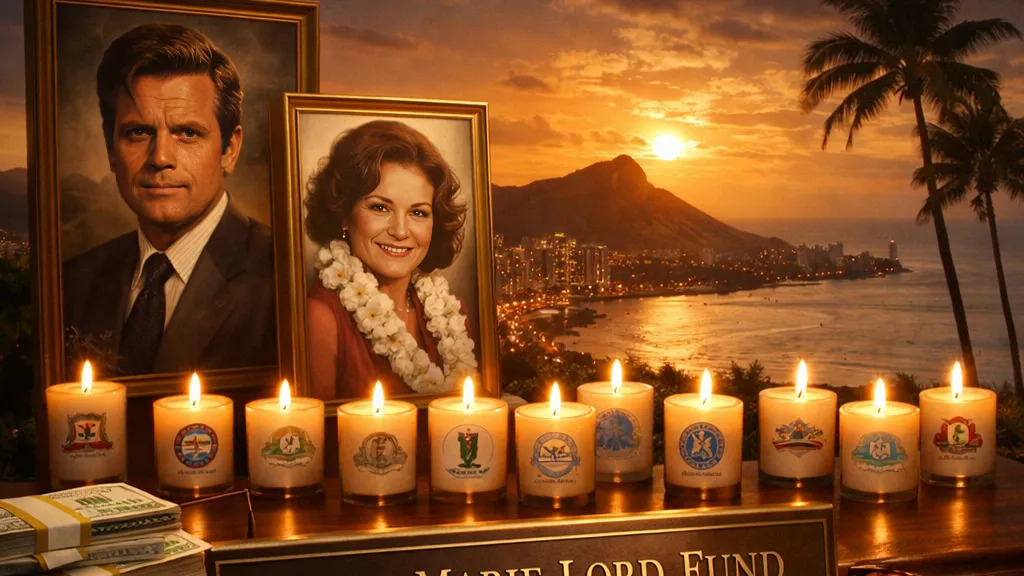
A philanthropic gift is only as meaningful as the impact it creates. The Jack and Marie Lord Fund, now nearly two decades into its perpetual mission, generates approximately $1.6 to $2 million annually for twelve Hawaiian nonprofits. But what does that actually mean? How does this money translate into changed lives, strengthened communities, and sustained hope? The answer lies in the specific, tangible ways these organizations use their grants to serve Hawaii's most vulnerable populations and enrich the islands' cultural and social fabric.
How the Endowment Works
The $40 million endowment is invested by the Hawaii Community Foundation, generating returns that fund annual grants to the twelve beneficiary organizations Jack and Marie Lord identified. The principal remains intact, ensuring that the fund can continue generating income indefinitely. Each year, the returns are distributed among the twelve nonprofits, with grants ranging from approximately $32,000 to $340,000 depending on the organization's size and needs.
This model provides something invaluable to nonprofits: predictability. Most charitable organizations operate on uncertain funding, never knowing from year to year whether grants will be renewed, whether donors will continue giving, or whether economic downturns will dry up their revenue streams. The Lord Fund provides reliable, consistent support that allows these organizations to plan strategically, invest in infrastructure, hire and retain quality staff, and serve their communities with confidence.
Hospice Hawaii and St. Francis Hospice: Dignity in Life's Final Chapter
Hospice Hawaii and St. Francis Hospice receive funding that has allowed them to expand end-of-life care services and grief counseling across the islands. Families facing the most difficult moments of their lives receive compassionate, professional support—support that might not exist without the Lords' endowment.
End-of-life care is expensive and often inadequately covered by insurance. Many families face impossible choices between quality care for dying loved ones and financial ruin. Hospice services provide medical care, pain management, emotional support, and grief counseling that allow people to die with dignity and families to grieve with support.
The Lord Fund grants allow these hospice organizations to serve patients regardless of ability to pay, to provide in-home care that allows people to die in familiar surroundings rather than hospitals, and to offer bereavement counseling that helps families process their grief and begin healing.
Consider what this means in practice: A elderly Hawaiian man dying of cancer receives in-home hospice care, allowing him to spend his final weeks surrounded by family rather than in a hospital. His wife receives grief counseling after his death, helping her process her loss and avoid the depression and isolation that often follow bereavement. Their adult children receive support in explaining death to their own children, helping the next generation understand and process loss in healthy ways.
This is the ripple effect of the Lord Fund: one grant supports services that touch multiple generations and prevent cascading problems that would otherwise require intervention.
Guide Dogs of Hawaii and Hawaii Lions Eye Foundation: Restoring Independence
Guide Dogs of Hawaii and the Hawaii Lions Eye Foundation use their grants to provide service dogs, assistive technology, and vision surgeries to residents in need. People who might otherwise struggle with blindness or visual impairment receive the tools and medical care that restore independence and dignity.
Vision loss is devastating, often leading to unemployment, social isolation, depression, and loss of independence. Service dogs provide mobility and confidence. Assistive technology allows people to continue working and engaging with the world. Vision surgeries can restore sight that seemed permanently lost.
The Lord Fund grants allow these organizations to serve people who couldn't otherwise afford these services. A working-class Hawaiian woman with diabetic retinopathy receives surgery that saves her vision, allowing her to keep her job and remain independent. A blind veteran receives a guide dog that gives him the confidence to navigate his community, shop independently, and maintain social connections.
These interventions don't just help individuals—they prevent the social costs of disability, including unemployment, social service dependency, and the psychological toll of lost independence. By investing in vision services, the Lord Fund creates returns that extend far beyond the individuals directly served.
PBS Hawaii's HIKI NŌ, The Arc, and Variety School: Investing in Youth and Special Needs
PBS Hawaii HIKI NŌ, The Arc, and Variety School support youth journalism programs and special-needs vocational training. Young people develop skills, confidence, and opportunities they might never have accessed otherwise. Students with disabilities receive training that leads to meaningful employment and independent living.
HIKI NŌ is a youth journalism program that teaches middle and high school students to research, report, film, and edit news stories about their communities. Students develop critical thinking, communication, technical, and teamwork skills while learning about journalism ethics and civic engagement. Many participants discover career interests and develop confidence that transforms their educational trajectories.
The Arc and Variety School provide vocational training and life skills education for people with developmental disabilities. These programs teach job skills, social skills, money management, and independent living skills that allow people with disabilities to work, live independently, and participate fully in their communities.
The Lord Fund grants allow these organizations to serve more students, invest in equipment and technology, hire quality instructors, and develop new programs. A teenager with autism receives vocational training that leads to employment at a local business, allowing him to earn income, develop social connections, and live semi-independently. A high school student discovers a passion for journalism through HIKI NŌ, leading to a college scholarship and eventual career in media.
These investments in youth and people with disabilities create lifelong returns. Skills learned, confidence gained, and opportunities accessed compound over decades, transforming individual lives and strengthening communities.
Honolulu Museum of Art and Bishop Museum: Preserving Culture and Heritage
The Honolulu Museum of Art and Bishop Museum preserve and share Hawaiian culture, history, and artistic heritage. These institutions serve as educational resources and cultural anchors for the entire community, made stronger by the reliable funding the Lord Fund provides.
Museums do more than display artifacts—they preserve cultural memory, educate new generations, foster community identity, and provide spaces for reflection and inspiration. In Hawaii, where indigenous culture faces ongoing threats from commercialization and cultural appropriation, museums play a crucial role in authentic preservation and education.
The Lord Fund grants allow these museums to maintain collections, develop educational programs, offer free or reduced admission to local residents, and create exhibits that tell Hawaiian stories with depth and authenticity. School groups visit and learn about Hawaiian history and culture. Families spend weekends exploring art and artifacts. Researchers access collections that inform scholarship and cultural preservation.
A young Hawaiian child visits Bishop Museum and sees artifacts from her ancestors, connecting her to a cultural heritage that might otherwise feel distant or abstract. An artist visits the Honolulu Museum of Art and finds inspiration that influences her work for years to come. A teacher brings her class to learn about Hawaiian history, providing context and understanding that textbooks alone cannot convey.
Cultural institutions create value that's difficult to quantify but essential to community health and identity. The Lord Fund's support ensures these institutions can continue their vital work regardless of economic fluctuations or changing funding priorities.
Hawaiian Humane Society: Caring for Animals
The Hawaiian Humane Society cares for abandoned and abused animals—a cause that would have resonated deeply with Jack, who grew up riding horses and maintaining that lifelong connection to animals.
Animal welfare organizations provide essential services: rescuing abandoned and abused animals, providing veterinary care, facilitating adoptions, investigating animal cruelty, and educating the public about responsible pet ownership. These services protect both animals and public health, as animal abuse often correlates with other forms of violence and neglect.
The Lord Fund grants allow the Hawaiian Humane Society to rescue more animals, provide more extensive veterinary care, maintain better facilities, and conduct more thorough investigations of abuse cases. A dog rescued from a fighting ring receives medical care and behavioral rehabilitation, eventually finding a loving home. A cat colony is humanely managed through trap-neuter-return programs, preventing overpopulation and disease. Children learn about responsible pet ownership through educational programs, preventing future neglect and abandonment.
Jack Lord's childhood connection to animals—those hours riding horses across his mother's farm—found expression in this aspect of his and Marie's philanthropy. The boy who loved animals became a man who ensured animals would be cared for long after he was gone.
USO Hawaii and Salvation Army's Kroc Center: Strengthening Community
USO Hawaii and the Salvation Army's Kroc Center support military families and provide community services, food assistance, and recreational programs that strengthen Hawaii's social fabric.
Hawaii has a significant military presence, with service members and their families facing unique challenges: frequent relocations, deployment separations, reintegration difficulties, and the stress of military life. USO Hawaii provides support services, recreational programs, and community connections that help military families thrive despite these challenges.
The Salvation Army's Kroc Center provides community services including food assistance, youth programs, senior services, and recreational facilities. These programs strengthen community bonds, provide safety nets for vulnerable populations, and create spaces where people from diverse backgrounds can connect and support each other.
The Lord Fund grants allow these organizations to serve more families, expand programs, and maintain facilities. A military spouse finds community and support through USO programs while her husband is deployed. A low-income family receives food assistance that prevents hunger and allows parents to focus on work and children's education. Teenagers participate in youth programs that provide positive alternatives to gangs and substance abuse.
Community-strengthening organizations create social capital—the networks of relationships and mutual support that allow communities to function effectively and respond to challenges. The Lord Fund's support helps build and maintain this essential social infrastructure.
The Ripple Effect: Impact Beyond Direct Services
Each of these organizations operates more effectively because of the Jack and Marie Lord Fund. The grants aren't one-time windfalls but reliable annual support that allows for strategic planning, program development, and sustained impact. Executive directors can budget with confidence. Programs can be built to last. Staff can be hired and retained. The ripple effects extend far beyond the dollar amounts.
Consider the multiplier effects: A hospice nurse hired with Lord Fund support serves dozens of families each year. A guide dog trained with Lord Fund support serves its recipient for a decade. A student who participates in HIKI NŌ becomes a journalist who informs her community for decades. A museum exhibit funded by the Lord Fund educates thousands of visitors.
The Lord Fund's impact compounds over time. Each year's grants create effects that extend for years or decades. Over the nearly two decades since Marie's gift, the cumulative impact has touched tens of thousands of lives—and the impact will continue growing for as long as the endowment exists.
A Living Legacy
This is what Jack and Marie Lord envisioned: not a monument to themselves, but a living legacy that would continue serving Hawaii's people, animals, culture, and communities long after they were gone. The twelve organizations they chose represent their values: compassion for the vulnerable, support for education and culture, care for animals, and service to community.
Every person who receives hospice care, every child who gains vision, every student who develops skills, every family that finds support—they are all part of the Lords' legacy. Most will never know Jack and Marie Lord's names. They won't know about Steve McGarrett or Hawaii Five-0. But their lives will be better because two people who loved Hawaii chose to give everything back.
That is the true measure of philanthropic impact: not recognition or gratitude, but changed lives and strengthened communities. The Jack and Marie Lord Fund delivers that impact year after year, quietly and effectively, exactly as Jack and Marie would have wanted.
501 Donate connects donors with thoroughly vetted charities and causes that matter. For questions, reach us through our YouTube channel, website, or email—or contact the 501(c)(3) organization directly. Please note that 501 Donate is a for-profit marketing company, not itself a nonprofit or charity, and does not accept donations or gifts of any kind.