
Before you can apply for 501(c)(3) status, you need to establish your organization as a legal entity. The type of entity you choose will affect your formation requirements, governance structure, and operational flexibility.
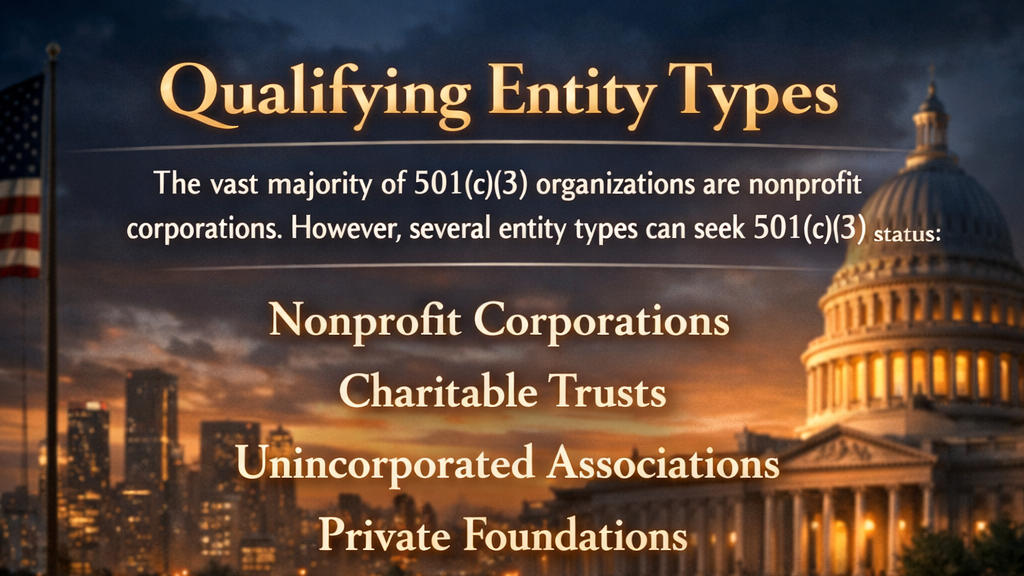
Qualifying Entity Types
The vast majority of 501(c)(3) organizations are nonprofit corporations. However, several entity types can seek 501(c)(3) determination from the IRS:
Corporations (the most common structure)
Trusts
Community chests
Unincorporated associations
The Special Case of LLCs
Under very limited circumstances, Limited Liability Companies (LLCs) can also qualify for 501(c)(3) status. However, strict requirements apply:
The LLC's entire membership must consist of other recognized 501(c)(3) organizations
LLCs with individual members or non-tax-exempt entity members cannot apply
No LLC is eligible to file Form 1023-EZ (the streamlined application for tax exemption)
Because of these restrictions, LLCs rarely pursue 501(c)(3) status. Most organizations seeking this designation choose to incorporate as nonprofit corporations instead.
Why Entity Structure Matters
Nonprofit corporations offer several advantages: they're well-understood by the IRS, provide clear governance structures, offer liability protection for board members, and have established legal precedents. When choosing your entity structure, consider your organization's specific needs, governance preferences, and long-term goals. For most charitable organizations, the nonprofit corporation structure provides the best combination of flexibility, protection, and regulatory clarity.
501 Donate connects donors with thoroughly vetted charities and causes that matter. For questions, reach us through our YouTube channel, website, or email—or contact the 501(c)(3) organization directly. Please note that 501 Donate is a for-profit marketing company, not itself a nonprofit or charity, and does not accept donations or gifts of any kind.